

What Is Digital Growth?
Digital Growth: A Comprehensive Guide
his blog post provides a comprehensive guide to digital growth, exploring its definition, importance, strategies, and key performance indicators (KPIs). It delves into various aspects of digital growth, including understanding your audience, leveraging data analytics, optimizing user experience, and adapting to emerging technologies. Whether you’re a seasoned marketer or just starting your digital journey, this guide offers valuable insights and actionable tips to help you achieve sustainable digital growth.
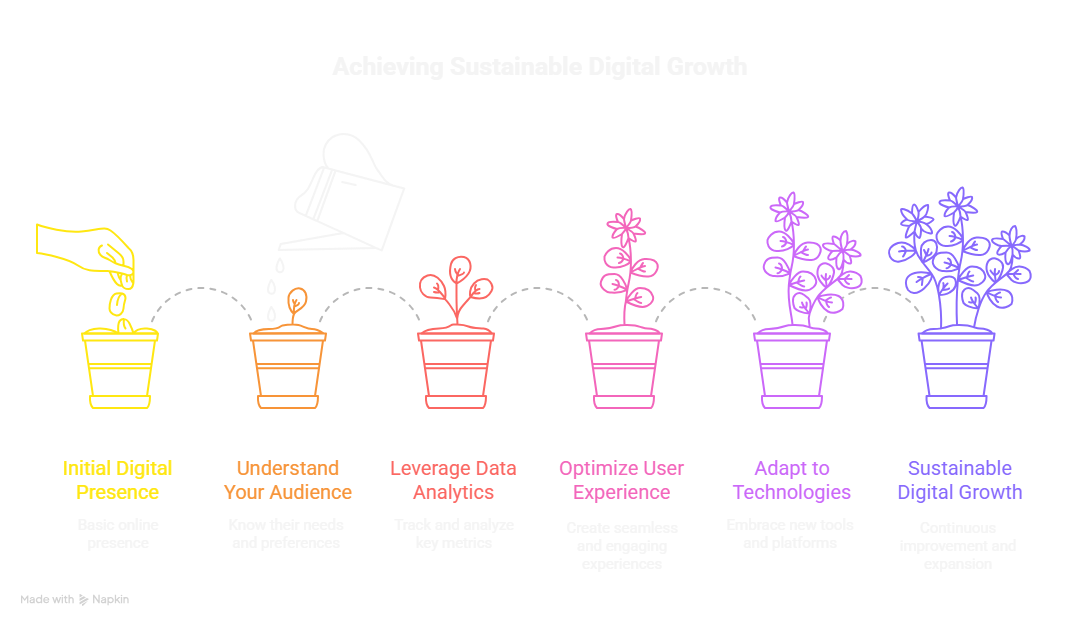
What is Digital Growth?
Digital growth refers to the strategic and sustainable expansion of a business’s online presence, reach, and revenue through various digital channels and tactics. It encompasses a wide range of activities, including
-
Increasing website traffic: Driving more visitors to your website through search engine optimization (SEO), social media marketing, content marketing, and paid advertising.
-
Generating leads: Capturing the contact information of potential customers through lead magnets, landing pages, and forms.
-
Improving conversion rates: Optimizing your website and marketing materials to convert more visitors into customers.
-
Boosting customer engagement: Fostering meaningful interactions with your audience through social media, email marketing, and online communities.
-
Enhancing brand awareness: Building a strong and recognizable brand identity online through consistent messaging and valuable content.
- Driving revenue growth: Ultimately, increasing sales and profitability through effective digital marketing strategies.
Why is Digital Growth Important?
In today’s digital age, a strong online presence is crucial for business success. Digital growth offers numerous benefits, including:

-
Expanded reach: Reaching a global audience beyond geographical limitations.
-
Increased brand visibility: Enhancing brand awareness and recognition among potential customers.
-
Improved customer engagement: Building stronger relationships with customers through personalized interactions.
-
Data-driven decision-making: Leveraging data analytics to understand customer behavior and optimize marketing efforts.
-
Cost-effectiveness: Digital marketing can be more cost-effective than traditional marketing methods.
-
Competitive advantage: Staying ahead of the competition by adopting innovative digital strategies.
-
Measurable results: Tracking and analyzing key performance indicators (KPIs) to measure the effectiveness of digital marketing campaigns.
Key Strategies for Digital Growth
Several key strategies can help businesses achieve sustainable digital growth:
1. Understanding Your Audience
-
Target audience research: Conduct thorough research to identify your ideal customers, their demographics, interests, and online behavior.
-
Buyer personas: Create detailed buyer personas to represent your target audience segments and understand their needs and motivations.
-
Customer journey mapping: Map out the customer journey to understand how customers interact with your brand across different touchpoints.

2. Search Engine Optimization (SEO)
-
Keyword research: Identify relevant keywords that your target audience is searching for online.
-
On-page optimization: Optimize your website content and structure to improve search engine rankings.
-
Off-page optimization: Build high-quality backlinks from reputable websites to increase your website’s authority.
-
Technical SEO: Ensure your website is technically sound and easy for search engines to crawl and index.

3. Content Marketing
-
Create valuable content: Develop high-quality, informative, and engaging content that resonates with your target audience.
-
Content formats: Utilize various content formats, such as blog posts, articles, videos, infographics, and podcasts.
-
Content distribution: Promote your content through social media, email marketing, and other channels.
-
Content calendar: Plan and schedule your content creation and distribution efforts.

4. Social Media Marketing
-
-
Choose the right platforms: Identify the social media platforms where your target audience is most active.
-
Create engaging content: Develop compelling content that encourages interaction and sharing.
-
Build a community: Foster a sense of community among your followers by responding to comments and messages.
-
Run social media ads: Utilize paid advertising to reach a wider audience and drive traffic to your website.
-
5. Email Marketing
-
Build an email list: Collect email addresses from website visitors and customers.
-
Segment your audience: Divide your email list into segments based on demographics, interests, and behavior.
-
Personalize your emails: Tailor your email messages to each segment to increase engagement.
-
Automate your email campaigns: Set up automated email sequences to nurture leads and onboard new customers.